Food Sources and Bioavailability
Zinc is abundant across several food categories, although the body's ability to absorb it (bioavailability) varies depending on the overall composition of the meal.
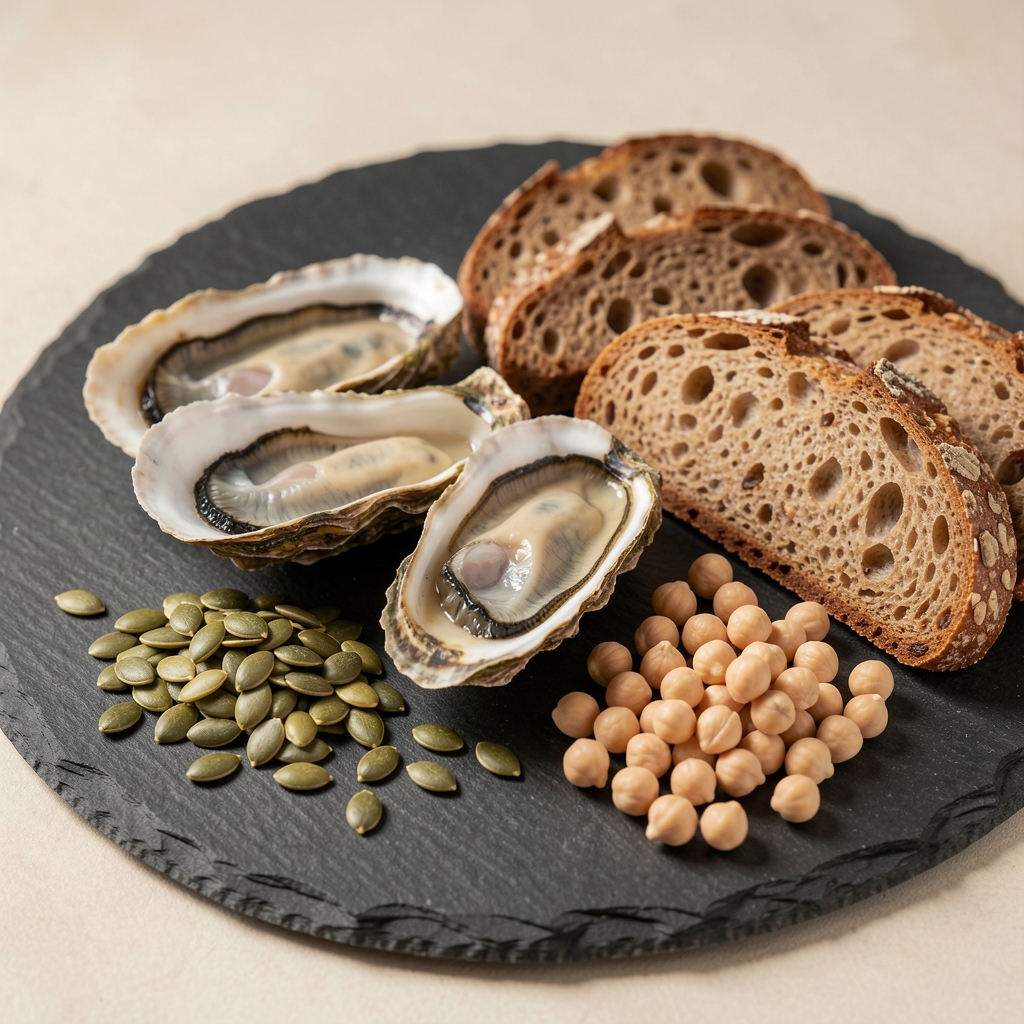
- Seafood & Shellfish: Oysters are by far the richest dietary source, while crab, prawns, and mussels provide moderate amounts.
- Meat & Poultry: Beef, lamb, and turkey provide highly bioavailable forms of zinc bound to proteins.
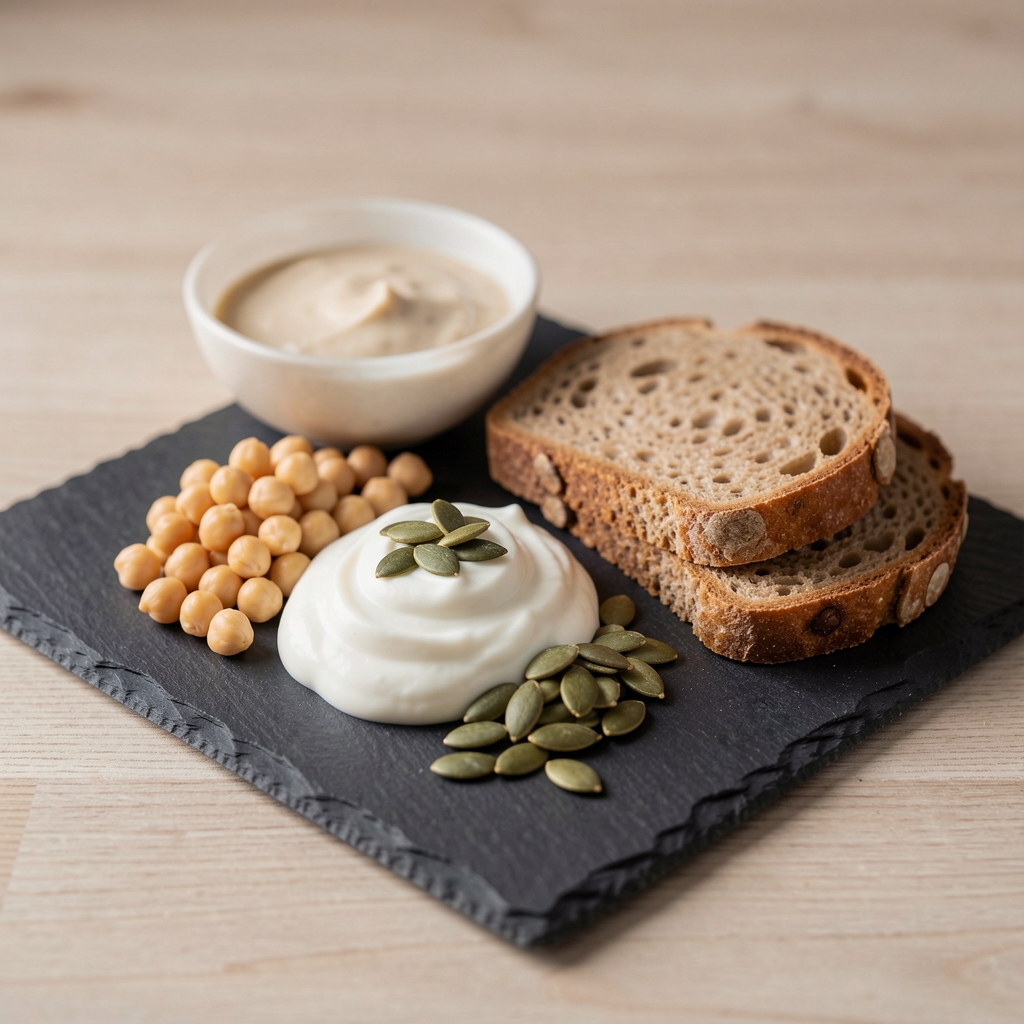
- Legumes & Pulses: Chickpeas, lentils, and kidney beans are excellent plant sources, especially when soaked or sprouted to reduce phytates.
- Nuts & Seeds: Pumpkin seeds, hemp seeds, cashews, and pine nuts are versatile zinc-rich options for daily meals.
- Wholegrains & Dairy: Oats, wholewheat bread, milk, and cheese contribute regular background amounts to UK diets.
What Public Wording Means
The authorised UK statement that zinc contributes to normal vision reflects its biological function as a cofactor for key retinal enzymes, including superoxide dismutase (SOD) and retinol dehydrogenase (which assists vitamin A metabolism).
This wording applies strictly to the nutrient itself within a balanced diet. It is not an endorsement of any branded supplement formula, nor is it a guarantee of individual visual sharpness.
Key Takeaways for Readers
- Zinc is concentrated in ocular tissues and supports vital retinal enzymes.
- Both plant-based and omnivorous diets can readily meet daily zinc requirements.
- Soaking pulses and nuts can help improve plant-based mineral bioavailability.
- Excessive zinc supplementation can interfere with copper absorption; balance is key.