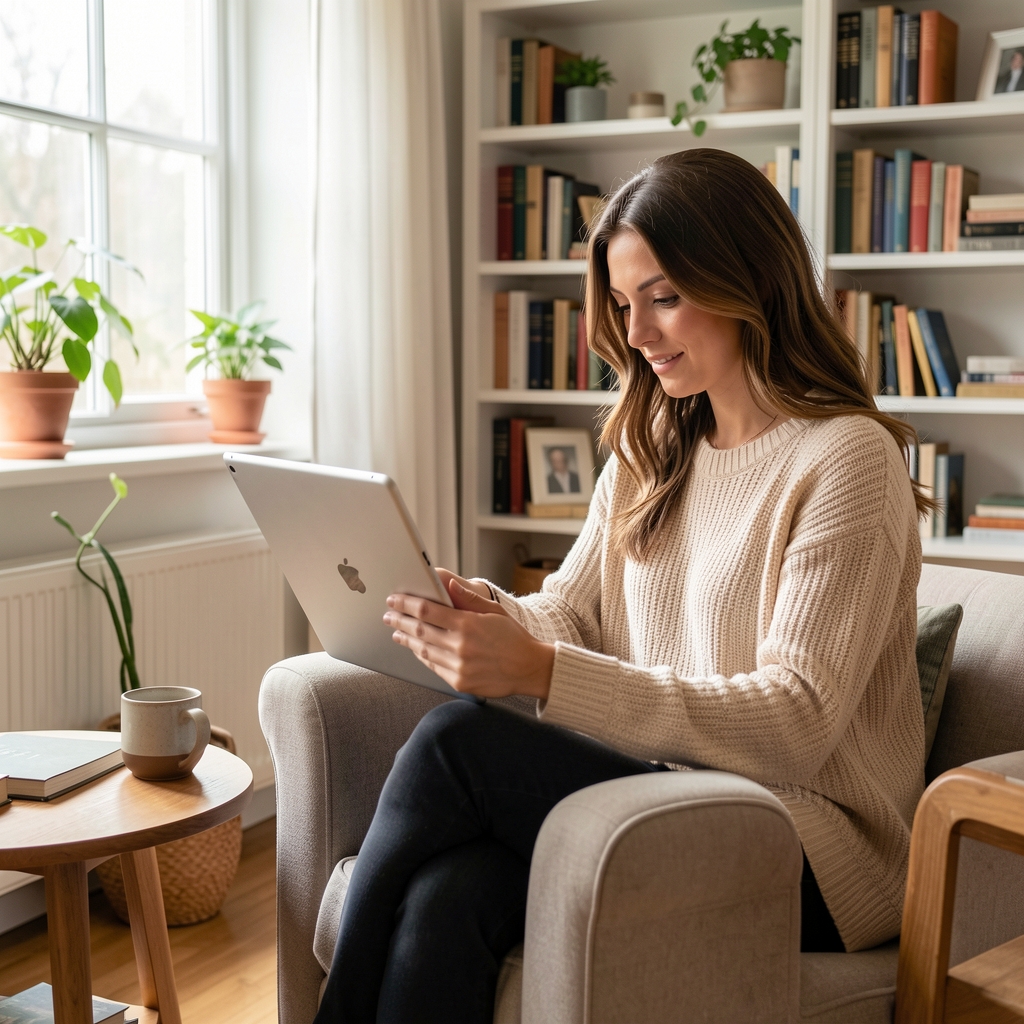
Distance and text
A comfortable viewing distance depends on the screen, content and person. Text that is too small encourages leaning forward, while excessive distance can make detail harder to read. Larger type and clear spacing are simple accessibility choices that benefit many readers.
Light and glare
Reflections from windows and overhead fixtures can compete with the screen. A slight change in desk position, a matte surface or softer room lighting may change the visual experience. There is no single arrangement that suits every room.
Pauses and task variety
Long periods of close work can feel demanding. Alternating tasks, looking towards a farther point and building natural pauses into a routine can make the day easier to describe and organise. These are environmental observations rather than a promise of a particular result.
Personal screen checklist
- Is the text large enough to read without leaning forward?
- Are reflections visible on the display?
- Does the room have balanced, comfortable illumination?
- Which task and duration tend to feel most demanding?
Key takeaways
- Viewing distance and text size interact.
- Glare and room lighting influence comfort.
- Recording patterns can make a professional conversation clearer.