Where these compounds appear
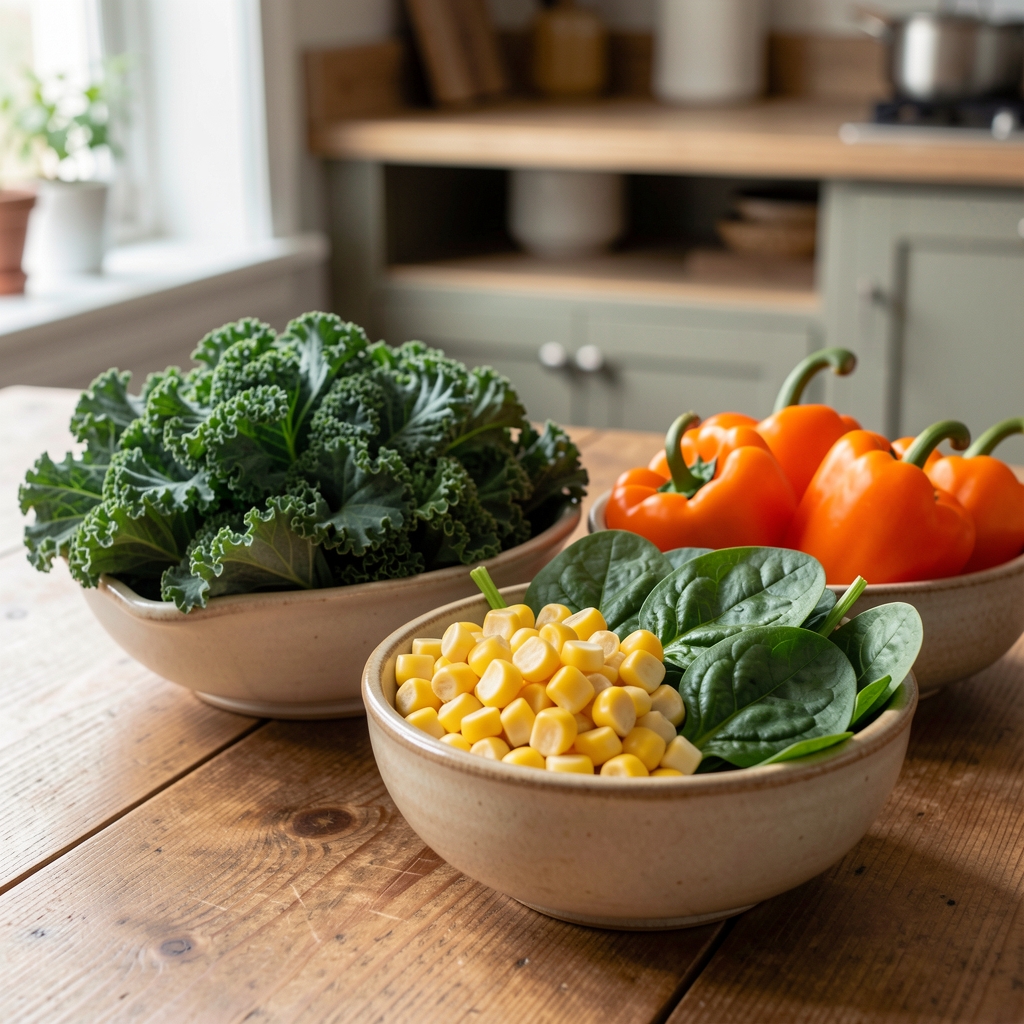
Dark leafy greens, sweetcorn, peas and some orange or yellow vegetables are familiar food sources. Eggs also contribute in smaller amounts. Food composition varies with portion, preparation and storage, so a simple list cannot predict an individual intake. Looking at the overall pattern is more useful than treating one ingredient as the centre of a daily routine.
How research is discussed
Research may compare dietary questionnaires, blood measurements, observational groups or carefully controlled supplement amounts. Each approach answers a different question. An association between a food pattern and an outcome does not by itself explain every factor involved. Readers should notice whether a source describes an observation, a proposed mechanism or an authorised nutrition statement.
Food first, product second
A varied diet can include several nutrients and food qualities at once, including fibre, protein and different pigments. A food supplement has a more concentrated composition and may not resemble the wider pattern. Labels, quantities and personal circumstances matter. A qualified professional can help someone interpret a product label in context.
A practical reading framework
- Identify the exact nutrient or compound being discussed.
- Check whether the source concerns food, a supplement or a laboratory model.
- Look for the population, timescale and outcome described.
- Separate authorised wording from promotional interpretation.
Key takeaways
- Lutein and zeaxanthin occur in many colourful foods.
- Study designs have different strengths and limits.
- A food pattern is broader than a single product.
- This refers to the individual nutrient, not to any specific product.