Focusing at close range
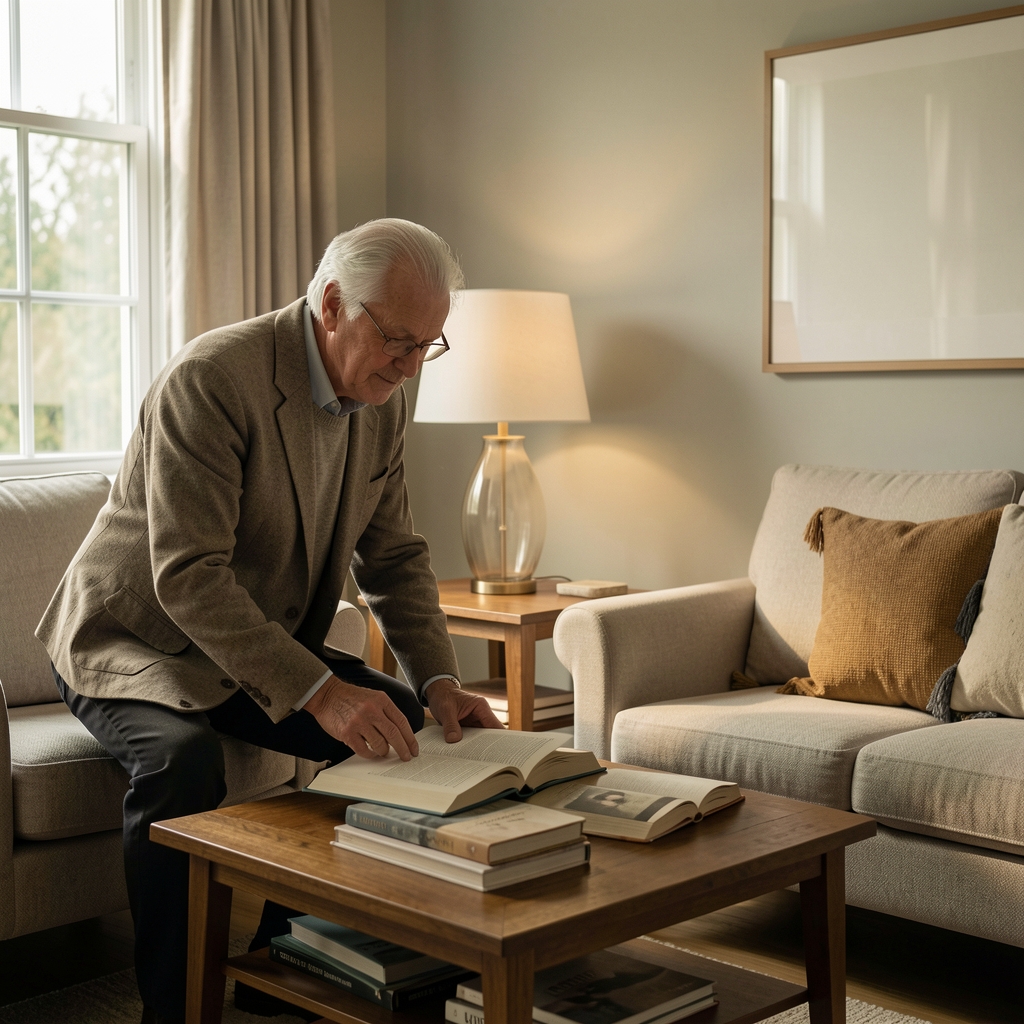
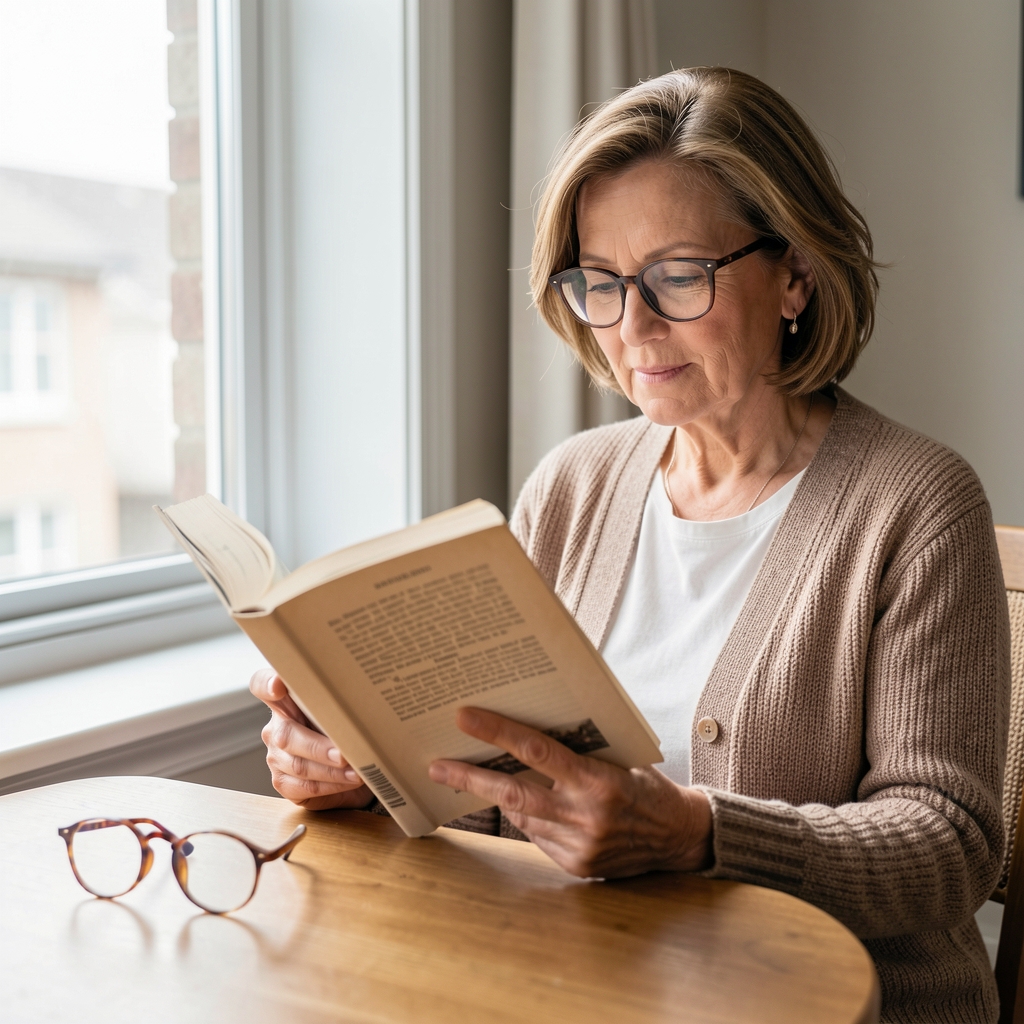
The eye changes over time, and the near-focusing system is one reason reading distance can feel less effortless in middle age. A flexible internal structure helps the eye adjust between distances. With age, that flexibility can reduce gradually. Readers may respond by holding text farther away, increasing illumination or choosing a larger type size. These simple observations are useful descriptions, not a basis for an individual conclusion.
Public information often uses specific terms for this experience. Understanding the terms can make conversations clearer, particularly when a person wants to describe when a change occurs, whether it is consistent and which tasks are affected. A written note about reading, driving, hobbies and screen use can provide a helpful starting point for a professional conversation.
Light, contrast and the reading environment
Brightness is only one part of a comfortable visual environment. Glare, reflections, low contrast and a light source positioned behind a reader can all alter how text appears. A lamp directed towards a page may be useful for some people, while others prefer diffuse daylight. Neutral backgrounds, uncluttered layouts and adequate spacing can also make information easier to follow.
Digital interfaces add another layer. Text size, contrast settings and viewing distance interact with the individual screen, room lighting and duration of use. Rather than looking for one ideal setting, readers can observe which combinations feel easiest and record those observations.
Why experiences differ
Age is one factor among many. Previous visual history, family context, general routines, work demands and the design of a person’s environment can all shape what they notice. Two adults of the same age may describe very different experiences. This is why broad articles should be read as background rather than a personal assessment.
Key takeaways
- Near focusing can feel less effortless after 40.
- Lighting, glare and contrast influence reading comfort.
- Individual experiences vary considerably.
- Clear notes can support a useful conversation with a qualified healthcare professional.
Questions worth recording
A short journal can capture the setting, task, distance and time of day connected with an observation. Readers might note whether the page was printed or digital, whether lighting was direct or diffuse and whether a change was occasional or recurring. This approach keeps attention on description and avoids turning a single moment into a sweeping conclusion.
Related reading
This article is for informational purposes only and does not constitute medical advice. Always consult your GP or a qualified healthcare professional before making changes to your diet, supplements, or lifestyle. Drentov accepts no responsibility for actions taken without professional medical guidance.